




Untreated hearing loss rarely stays where it starts.
Having your hearing evaluated should be a priority for every adult over 60. The longer hearing loss goes undiagnosed, the higher the chances of complications from strained relationships to increased fall risk and cognitive decline.
To help you manage your hearing health, Copper Sky Hearing & Tinnitus offers in-depth hearing evaluations right here in Las Vegas. Our hearing specialists are highly experienced and will assess whether you have hearing loss and if so, to what extent it’s affecting your life.
1 in 3
Adults between the ages of 65 and 74 have some degree of hearing loss. A yearly evaluation is the simplest way to catch changes early.
An evaluation isn't the same as a screening.
A hearing screening is a quick pass/fail check. A hearing evaluation is far more comprehensive , it identifies the type of hearing loss you have, the degree present, and other key contributing factors. Because screenings alone can't diagnose anything, we recommend a full evaluation every year.
Your hearing evaluation, step by step
Every evaluation at Copper Sky Hearing & Tinnitus follows the same thoughtful process, so you always know what’s coming next.
Ear Canal Inspection
We start by checking your ear canal and eardrum for cerumen (earwax) buildup, which can cause temporary hearing loss, tinnitus, or any visible signs of damage. Left untended, earwax buildup can harm the eardrum and lead to permanent hearing loss. Once your outer and middle ear are checked, we move on to sound specific testing.
Sound Hearing Tests
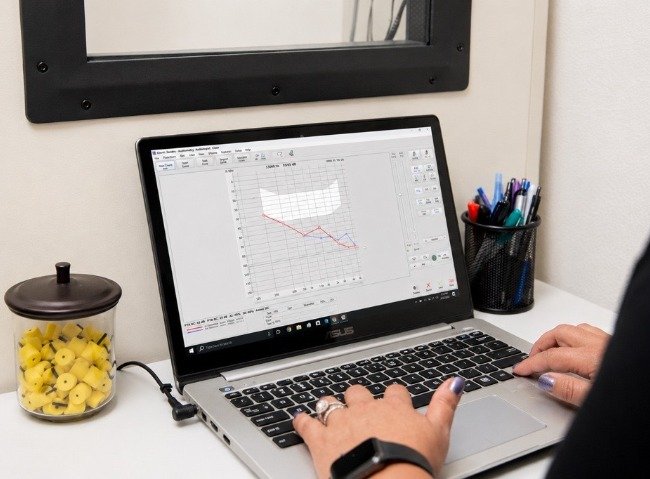
In our soundproof testing booth, we run two core tests to measure how you hear:
- Pure tone testing — with headphones on, you'll indicate when you hear tones played at different volumes and pitches, helping us identify high-frequency hearing loss and the volume at which sounds become unclear.
- Bone conduction testing — a small device placed behind your ears measures how well the sound conducting bones there are functioning.
Speech Hearing Tests
Once sound-specific tests are complete, we move through a couple of speech-based checks:
- Speech reception — we assess how well you hear and understand spoken words, since hearing loss often affects certain consonants first.
- Word recognition — we say a series of words and ask you to repeat them, checking whether the connection between ear and brain has been affected. If you brought a companion, we may ask them to read a word list too we're often most attuned to the voices we hear most.
- Speech in noise (QuickSIN®) — we evaluate how well you understand speech in noisy environments, providing valuable insight that a traditional hearing test alone cannot.
Post-Evaluation Consultation
Once testing is complete, we sit down with you to review your results and answer any questions. We'll explain what we found, what it means for your hearing, and whether any treatment is recommended. If hearing loss is present, we'll discuss the type and degree of loss and walk you through your personalized treatment options, including hearing aids when appropriate.
Choosing the Right Hearing Aid Technology
With hundreds of hearing aid models, styles, and technology levels available, choosing the right hearing aid can feel overwhelming. That’s where we come in.
Using the results of your evaluation, your listening needs, your lifestyle, and your goals, we will make a personalized recommendation for the hearing technology we believe will provide the best outcome. You’ll have the opportunity to experience your recommended hearing aids before making a final decision, giving you confidence that they’re the right fit for your everyday life.