







Where hearing happens

Hearing starts with your ears. Listening happens in your brain.

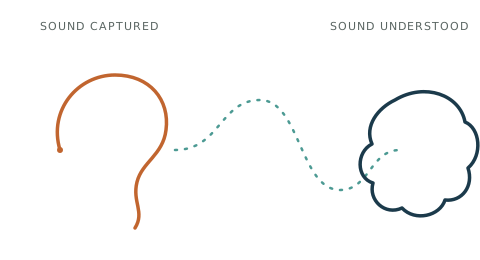
Your ears are the microphone — they capture sound waves and convert them into electrical signals. But raw signal isn’t meaning. Your brain is the processor: it separates speech from background noise, recognizes words, and understands context. That’s real, measurable cognitive work, happening every time you have a conversation.

When the ears send a weaker or incomplete signal, the brain has to work harder to fill in the gaps — every single day.

viewer-output

Ears: capture & transmit

Brain: decode & understand

The hidden cost

What untreated hearing loss asks of your brain

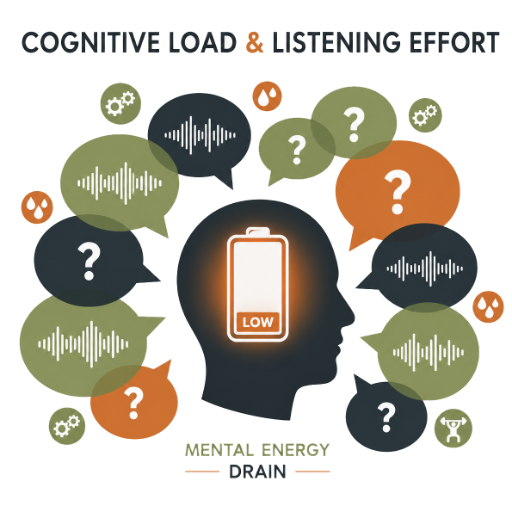
When hearing input is reduced, the brain reallocates effort to compensate. Over time, that shows up in ways that go well beyond the ears.

listening effort

Increased listening effort

The brain strains to fill in missing pieces of speech, even in familiar settings.

Mental fatigue

Constant compensation is tiring — many people feel drained after a full day of conversation.

Communication difficulties

Group conversations, phone calls, and background noise become harder to follow.

Social withdrawal

Straining to hear can make people avoid gatherings and conversations altogether.

Reduced quality of life

Over time, these effects can add up — connection, confidence, and enjoyment all take a hit.

The research

Hearing loss and brain health are connected

A growing body of research has found an association between untreated hearing loss and cognitive decline over time. Researchers believe this may be linked to increased cognitive load, reduced auditory stimulation to the brain, and social isolation.

Research continues to grow. Many studies show associations between hearing health, cognitive function, and overall well-being.

Tinnitus & the brain

Ringing, buzzing, or hissing? That's your brain too.

Tinnitus — the perception of sound like ringing or buzzing with no outside source — is generated and processed within the brain's auditory pathways, not the ear itself. That's exactly why an accurate diagnosis matters: tinnitus can have several different underlying causes, and it deserves a specialized evaluation rather than guesswork.

Why it's worth acting early

Treating hearing keeps you connected and engaged

The earlier hearing changes are addressed, the easier it is to stay engaged in conversations, relationships, and the moments that matter.

artificial-intelligence

Hearing technology

Modern solutions can improve access to sound and reduce everyday strain.

hear

Tinnitus care

Personalized strategies can help reduce the impact of tinnitus on your life.

audiology

Hearing protection

Protecting your hearing today helps preserve it for the moments that matter most.

heart

Ongoing support

Continued care and guidance help you stay on track for long-term well-being.

Physicians doctor
Referring Physicians

Partnering in
better hearing health.

We value collaboration and communication to ensure
your patients receive comprehensive, compassionate care.

Thank you for trusting us as your hearing health partner.

Begin Your Journey

Ready to take the first step?

Schedule your hearing or tinnitus evaluation and discover why patients trust Copper Sky Hearing & Tinnitus.